From fragmented customer journeys to one connected shopping experience.
I designed and built a Shopify storefront for my acrylic products and design business, bringing product discovery, digital files, custom orders, and design services into one place. This 0–1 project allowed me to apply product design principles to a real business challenge while exploring how AI can accelerate research, design, and development.
Product Designer · End-to-end design and development
E-commerce · Custom Products & Design Services
Platform
Approach
Shopify · Responsive Web, Mobile First
AI-assisted product design and development
Tools
Status
Figma · Illustrator · Claude · Claude Code · Shopify
In Progress (Pre-Launch)
Challenge
One business. Too many disconnected touchpoints.
Running my acrylic products and design business meant managing customer inquiries, orders, design files, and payments across Facebook Marketplace, Instagram, Etsy, email, and WhatsApp.
Through firsthand experience and competitor research, I identified pain points in product discovery, service categorization, and the purchasing journey. My goal was to bring these fragmented experiences into one storefront, helping customers find the right products and services more easily while simplifying the day-to-day management of the business.
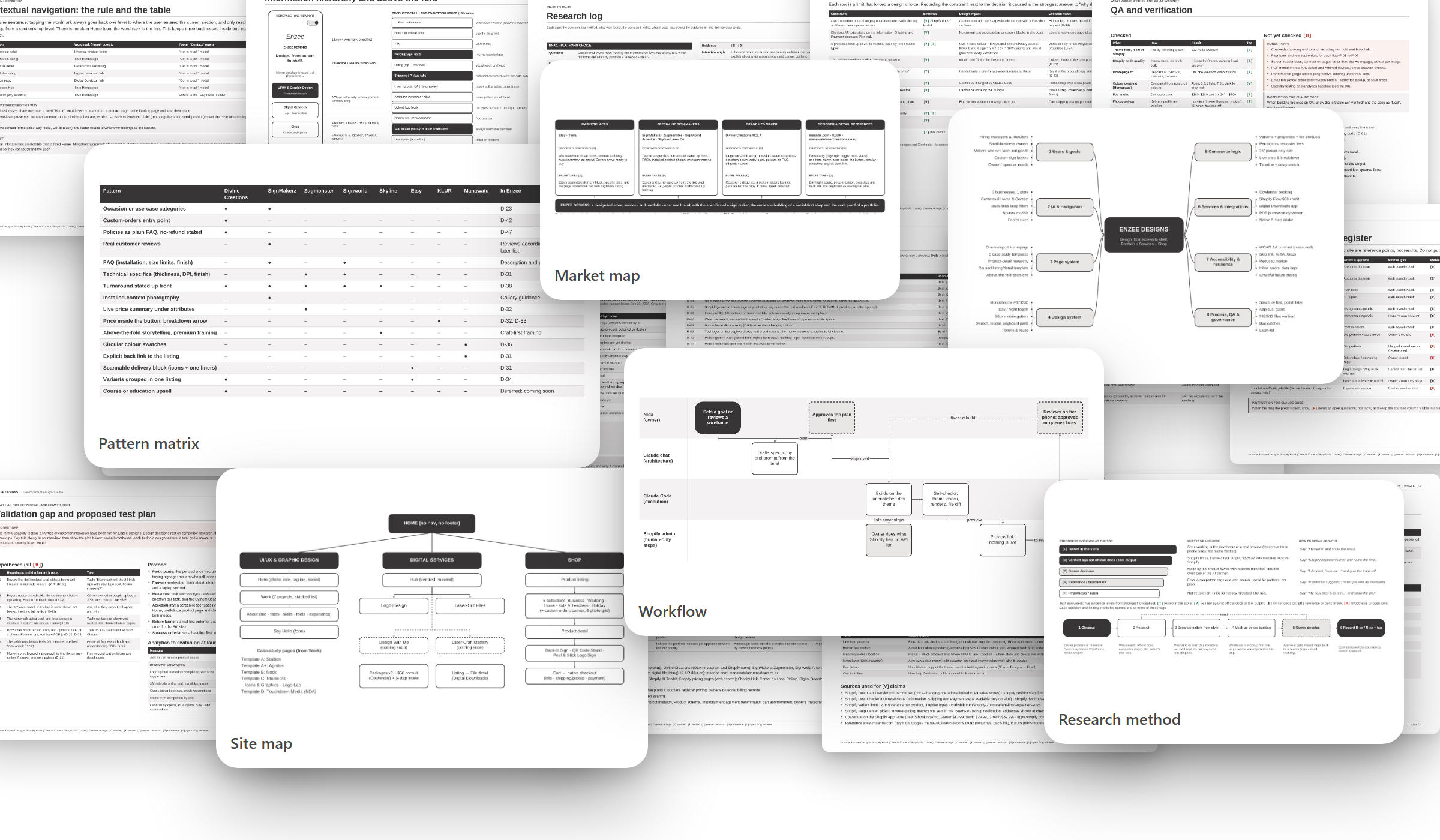
The research, mind map and workflow behind the store. The full detail is in the case study PDF.
Approach
Research, design, test, and refine.
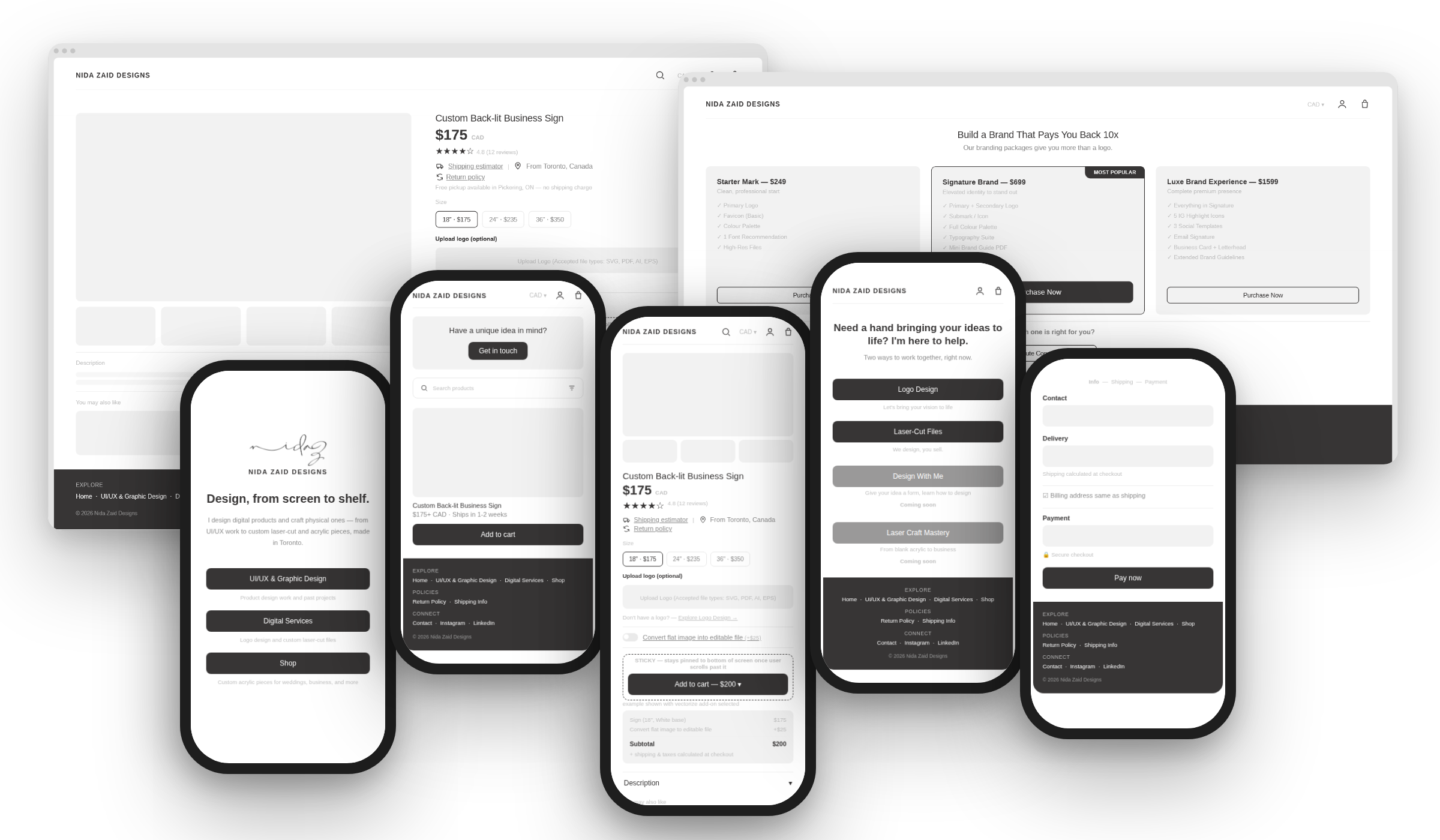
I combined competitor analysis, firsthand business insights, and AI-assisted research and ideation to identify gaps and explore solutions. I developed initial wireframes with Claude Chat, then refined the information architecture, layouts, and reusable design patterns in Figma, establishing design tokens to support consistency.
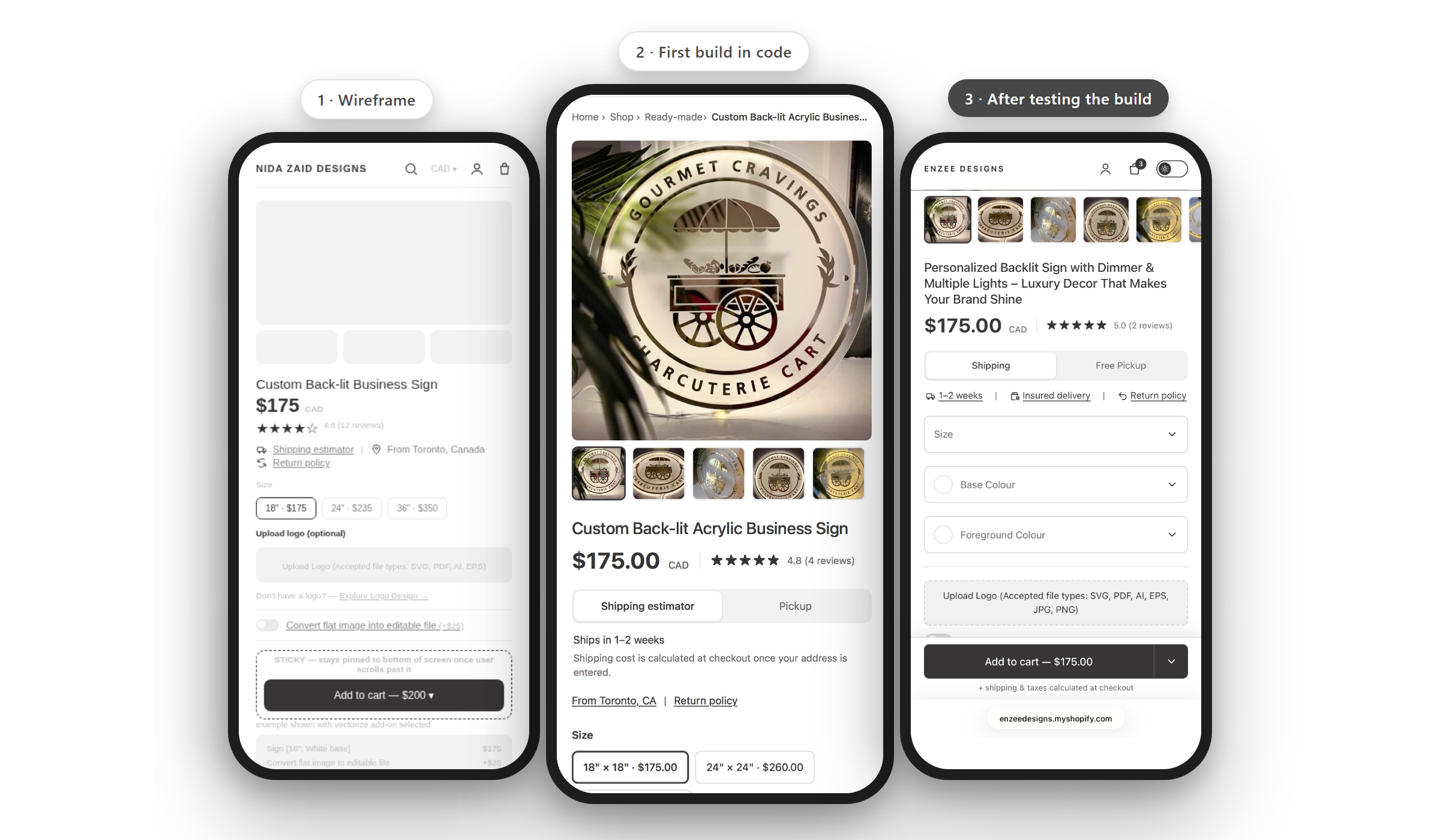
To explore AI-assisted implementation, I built the storefront’s core structure in Shopify using Claude Code and tested the experience directly in the browser. Along the way, I conducted informal usability testing and A/B-style comparisons of product description page versions to identify pain points, evaluate content presentation, and understand how users navigated the experience. The feedback informed iterative refinements to the categorization, content, and page structure, helping align the experience more closely with user expectations.
Where It Stands
A working storefront, still evolving.
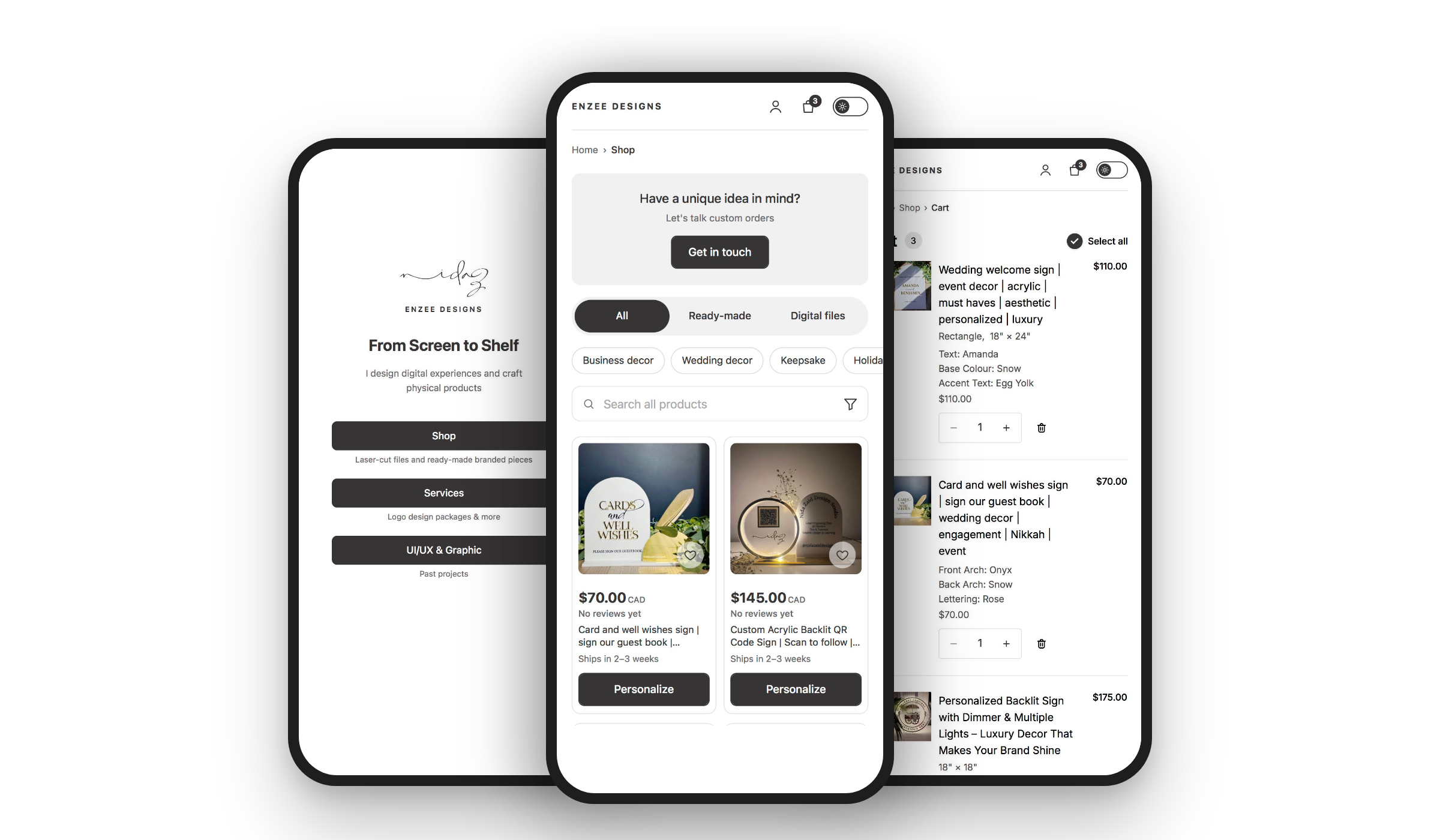
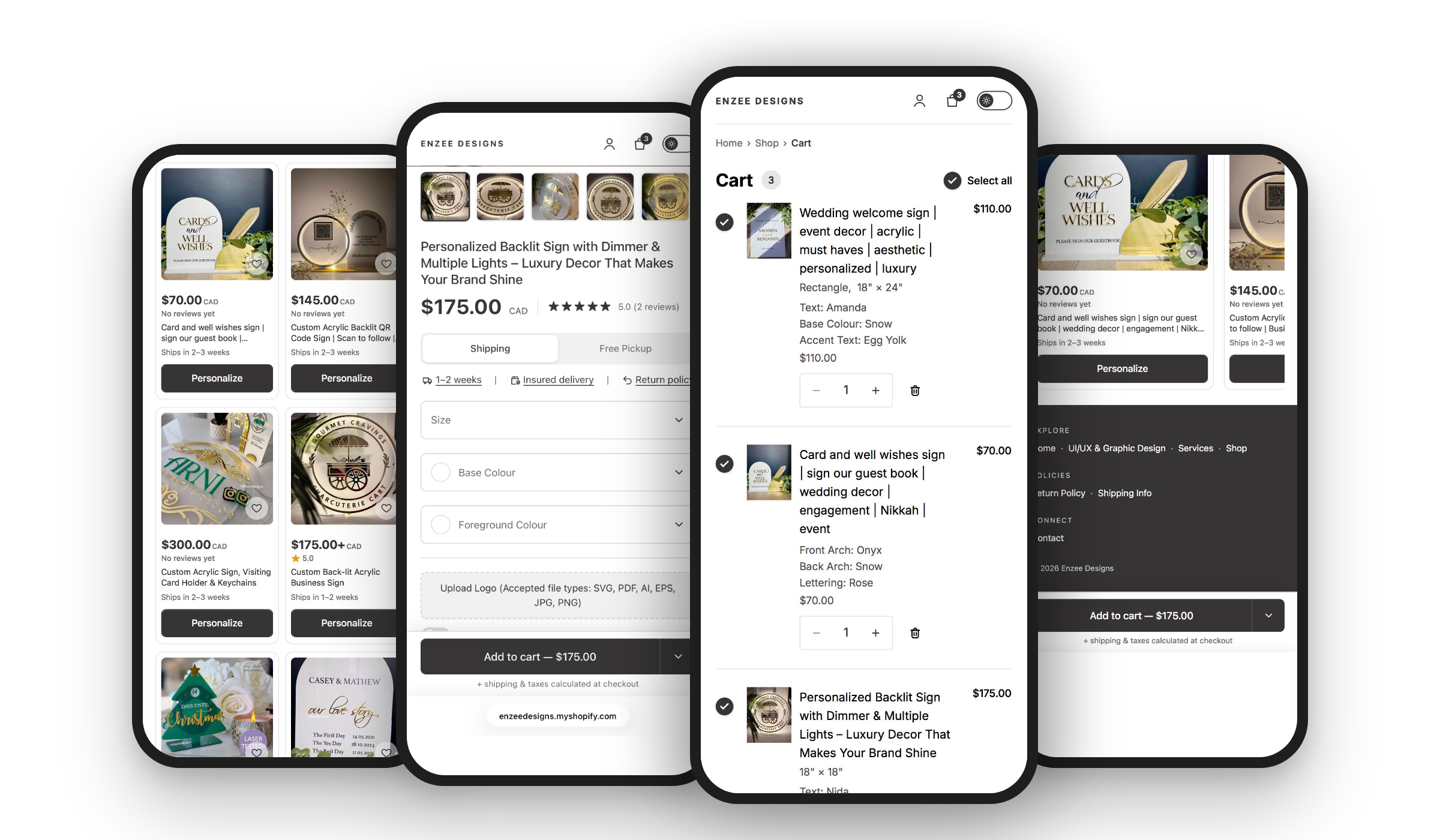
The core Shopify storefront structure and primary shopping experience are in place, bringing physical products, digital files, and design services together in one experience.
Testing revealed opportunities to improve discoverability and clarity. Usability testing showed that users struggled to find digital laser-cut files under Digital Services. I then used card sorting to understand where users expected these products to be categorized, which led to placing them under Shop instead. I also conducted A/B-style comparisons of product description page versions to evaluate content presentation and identify opportunities to refine the experience.
The project is ongoing, with further product expansion, advanced filtering, and shipping integrations planned. It has allowed me to apply end-to-end product design to a real business challenge while exploring how AI can accelerate development without replacing the need for user feedback, thoughtful design decisions, and continuous iteration.
The current store: shop, product page and cart, in testing before launch.